

PTSO means Parent Teacher Student Organization. It’s a school support group similar to a PTA, except students are formally included as members alongside parents and teachers, not just represented by adults on their behalf.
If you’ve spotted the term on a school flyer, a fundraiser email, or a sign-up sheet at back-to-school night, you’re not missing something obvious. Plenty of parents mix it up with PTA or PTO, and honestly, the differences are small enough that confusion makes sense.
Quick Answer
PTSO = Parent Teacher Student Organization
- A volunteer group that supports a school through fundraising, events, and communication
- Students hold actual membership or voting roles, unlike in a standard PTA
- Common in middle schools and high schools where student input matters more
- Not affiliated with the National PTA, so bylaws and dues vary by school
Read Also : GSC Meaning
What a Parent Teacher Student Organization Actually Does
At its core, a PTSO exists to bridge the gap between the people running a school and the people who show up for it every day. That means parents, teachers, and in this setup, students themselves.
Most PTSOs handle things like:
- Organizing fundraisers for supplies, field trips, or campus improvements
- Hosting events such as dances, spirit weeks, or teacher appreciation days
- Serving as a communication channel between families and school administration
- Giving students a formal voice in decisions that affect them
The student piece is what sets it apart. In a typical PTA, adults make the calls. In a PTSO, a student council rep or club leader might actually sit on the board and vote on how funds get spent.
PTSO vs PTA vs PTO: Where the Confusion Comes From
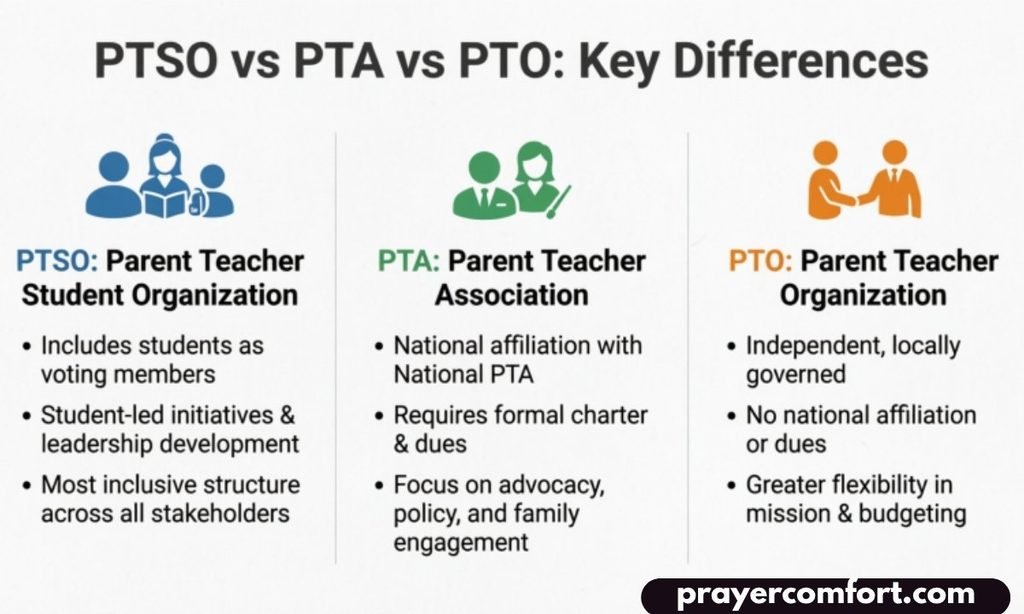
This is where most people get tripped up, and honestly, the terms overlap enough that even school staff use them loosely sometimes.
| Term | Full Name | Student Involvement | National Affiliation |
| PTA | Parent Teacher Association | Rarely a voting member | Affiliated with National PTA |
| PTO | Parent Teacher Organization | Rarely a voting member | Independent, no national body |
| PTSO | Parent Teacher Student Organization | Formal, often voting | Independent, no national body |
A PTA is tied to the National Parent Teacher Association, which means it follows a set of national bylaws and pays dues upward. A PTO is basically the same concept as a PTA but chose to stay independent, usually to skip the dues and keep more control locally.
A PTSO takes the independent PTO model and adds one more thing: it writes students into the group’s actual structure. That’s really the whole distinction, and it’s a smaller one than the alphabet soup makes it seem.
Read Slang : BFFR Meaning in Text
Why Schools Choose the PTSO Structure
I’ve seen this play out in a real middle school setting, and the reasoning usually comes down to timing. Elementary schools rarely bother with a PTSO because six-year-olds aren’t voting on budget line items. But once kids hit middle or high school, giving them a seat at the table tends to produce better turnout at events and more honest feedback about what’s actually working.
A school might switch from PTA to PTSO specifically because student council leadership wanted representation on fundraising decisions, not just a mention in the meeting minutes. That’s a nuance most explainer articles skip entirely.
When You’ll Actually See This Term
The label shows up in a handful of predictable places:
- School websites, usually under a “Get Involved” or “Community” tab
- Fundraising platforms like PTAvenue or Membership Toolkit, where the org type is listed
- Meeting agendas posted outside the front office or emailed monthly
- Class parent emails asking for volunteers under the PTSO banner
It’s almost exclusively an education term. You won’t find PTSO used in medical contexts, on Instagram as slang, or in casual texting the way some three-letter acronyms get repurposed. If someone searched expecting a text-speak or social media meaning, this one stays firmly in the school lane.
Joining or Getting Involved

Most PTSOs welcome anyone connected to the school, and joining is usually low friction. A typical process looks like this:
- Check the school’s website or a flyer sent home for a sign-up link
- Attend one open meeting, often held monthly, to see how things run
- Pay any small membership dues if the group charges them (many don’t)
- Volunteer for a committee, whether that’s fundraising, events, or communications
Some schools ask students to apply or get nominated for board positions, especially if seats are limited. Parents, on the other hand, can usually just show up.
Read Meaning : HY Meaning
Common Mistakes People Make
A few things trip people up regularly:
- Assuming PTSO membership automatically includes National PTA benefits or insurance coverage. It doesn’t, since PTSOs are independent.
- Thinking dues are mandatory. Many PTSOs are entirely donation based.
- Confusing a PTSO board seat with a student council seat. They’re related but not the same body, and mixing them up at a meeting is a fast way to look like you skimmed the newsletter.
- Assuming every school with a PTSO runs elections the same way. Bylaws differ school to school since there’s no national template to follow.
Similar and Related Terms
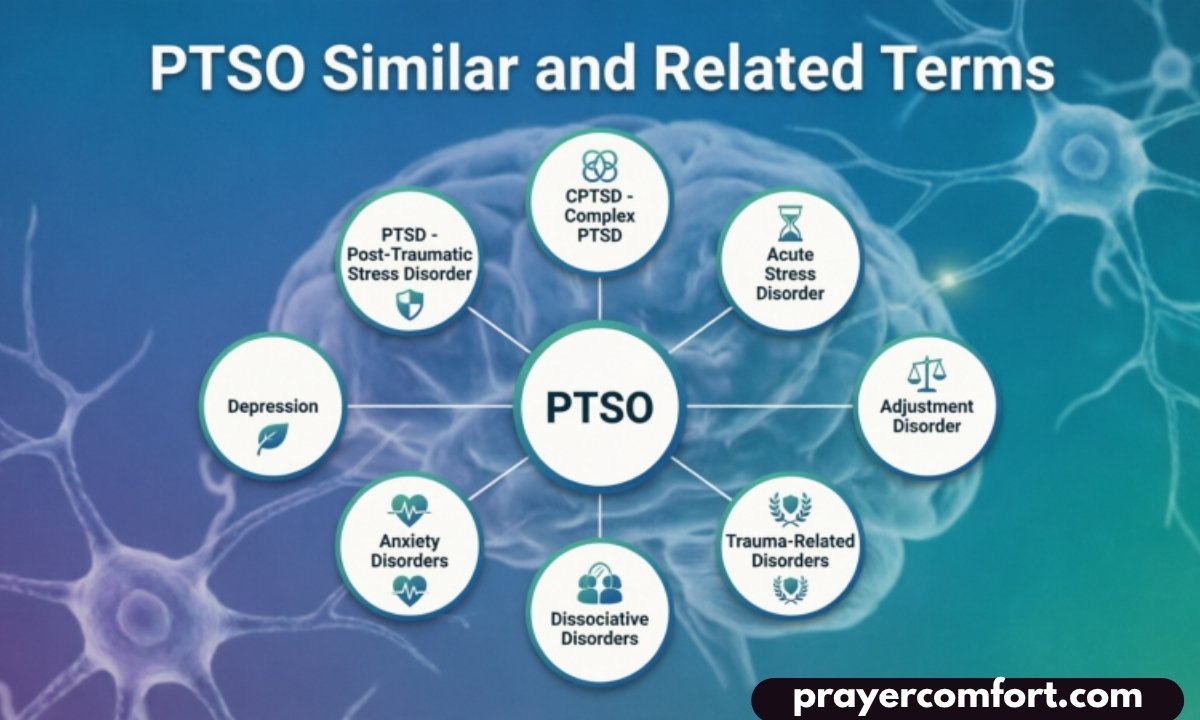
- PTA (Parent Teacher Association)
- PTO (Parent Teacher Organization)
- Booster Club (usually sport or program specific, like a band booster club)
- SGA (Student Government Association)
- Site Council (a separate governance body some schools use alongside a PTSO)
Frequently Asked Questions
Is a PTSO the same as a PTA?
Not exactly. A PTA is affiliated with the National PTA and follows its bylaws, while a PTSO is independent and typically gives students a formal role, sometimes including voting rights on the board.
Do students actually vote in a PTSO?
In many PTSOs, yes. Student representatives, often from student council, can hold official positions and vote on budget or event decisions, though the exact setup depends on the school’s own bylaws.
Are PTSO dues required?
Usually not. Most PTSOs rely on voluntary donations and fundraiser proceeds rather than mandatory membership fees, though a small number do charge nominal yearly dues.
Can any parent join a PTSO?
Generally yes. Most PTSOs are open to any parent or guardian of an enrolled student, and attending one meeting is usually enough to get on the volunteer list.
Why do some schools use PTO instead of PTSO?
It comes down to whether students are given a formal role. Schools that keep decision making entirely with adults tend to stick with PTO, while schools wanting direct student input adopt the PTSO model.
Does PTSO mean something different outside of school contexts?
No, PTSO is essentially exclusive to K-12 education settings. It doesn’t carry a separate slang meaning on social media or in medical terminology the way some acronyms do.
The Bottom Line
A PTSO is simply a school support group that treats students as real participants, not just the reason the group exists. Once you see it next to PTA and PTO, the naming makes a lot more sense.
If your school uses this term, the best move is checking their specific bylaws rather than assuming it works exactly like the PTA down the street. Every group sets its own rules for dues, voting, and student involvement, and that’s often where the real differences show up.

