

IDM in text usually means “I Don’t Mind.” People use it as a quick, low-effort way to say they’re fine with whatever option is on the table. If someone texts “wanna get pizza or tacos?” and you reply “idm,” you’re telling them either choice works for you.
That’s the short version. But IDM isn’t locked to one meaning everywhere, and the platform you see it on can shift what it’s actually saying.
Quick Answer
- Most common meaning: “I Don’t Mind” (used to show you’re easygoing about a decision)
- Less common but real: “In Direct Message,” seen on Instagram or Twitter/X when someone tells you to check your DMs
- Not texting slang, but worth knowing: IDM also stands for Internet Download Manager, a piece of software, though this has nothing to do with chatting
If you saw IDM in a group chat or a casual message, “I Don’t Mind” is almost certainly what the sender meant.
Read Slang : FT Meaning in Text
The Everyday Meaning, Explained Simply
“I Don’t Mind” is one of those phrases that gets shortened because it comes up constantly in texting. People use it when they’re being flexible, agreeable, or just don’t have a strong opinion.
Think about how often you’re asked to pick between two options during the day. What time works, what to eat, which movie to watch. IDM is the fast answer to all of that.
It carries a slightly different tone than “sure” or “okay.” IDM leans toward “you decide, I’m good either way,” rather than a flat agreement to one specific thing.
Read More : TW Meaning in Text
Where the Abbreviation Comes From
There’s no dramatic origin story here. IDM follows the same pattern as dozens of other texting abbreviations like IDK (I don’t know), IDC (I don’t care), and NVM (nevermind).
As phones got smaller keyboards and texting got faster, people naturally started dropping vowels and shortening common phrases. IDM is just one of many that stuck because it’s genuinely useful in daily conversation, not because it went viral or came from a specific app.
Does IDM Mean Something Different by Platform?
Mostly no, but there’s one context where it shifts, and most articles on this topic skip it entirely.
On texting apps (iMessage, WhatsApp, Android Messages), IDM is almost always “I Don’t Mind.” That’s the default reading in one-on-one or group chats.
On social platforms like Instagram or Twitter/X, you’ll occasionally see IDM used to mean “In Direct Message” or as shorthand pointing someone toward your DMs, similar to how people write “check ur dm” or “slid in ur dm.” It’s less standardized and shows up far less often than the texting meaning, but it does happen, especially in comment sections.
| Platform | Likely Meaning of IDM |
| Texting apps (iMessage, WhatsApp) | I Don’t Mind |
| Group chats, casual conversation | I Don’t Mind |
| Instagram/Twitter comments | Sometimes “In Direct Message” |
| Tech or software forums | Internet Download Manager |
If you’re unsure, the context around the message almost always makes it obvious within a second or two.
Read Slang : BTA Meaning Explained
Real Conversation Examples
Example 1, deciding on plans
“Movie night at mine or yours?” “idm, whichever is easier for you”
Example 2, food decisions
“Craving Thai or Mexican tonight?” “idm honestly, you pick”
Example 3, scheduling
“Can we push the call to 4pm instead of 3?” “idm, 4 works fine”
Example 4, the social media use
“Loved your last post, more details idm 👀” (here it’s being used more loosely, closer to “slide into my DMs” energy, though this usage is far less common)
Notice how in the first three, IDM is doing the same job every time: removing friction from a small decision. That’s really the whole function of the abbreviation.
Read Also : What Does WYF Mean
When to Use It (and When Not To)
IDM works well in casual texting with friends, family, or people you talk to informally at work over chat apps like Slack.
It’s a good fit when:
- You genuinely don’t have a preference
- You want to move the conversation along quickly
- The setting is informal
It’s a poor fit when:
- You’re texting someone you don’t know well and formality matters
- The message could come across as indifferent when you actually do care (some people read “idm” as slightly dismissive if overused)
- You’re in a professional email or a context where abbreviations read as unpolished
One nuance worth knowing: replying “idm” to a question that clearly needed a real opinion can sometimes land as avoidant, even if that’s not the intent. If a friend asks “do you actually want to talk about this or not,” idm is the wrong reply even though it’s grammatically valid.
Common Mistakes People Make With IDM
A few mix-ups come up again and again:
- Confusing it with IDK. IDM means you don’t have a preference. IDK means you don’t know the answer. They get swapped by accident more than you’d think.
- Assuming it’s always about DMs. The “In Direct Message” reading is real but niche. Most of the time it has nothing to do with direct messages at all.
- Overusing it in serious conversations. Using idm to dodge a question about something that actually matters can come across as checked out.
- Mistaking it for the software. Internet Download Manager is a completely separate thing and has zero connection to how the term is used in chat.
Similar Texting Abbreviations
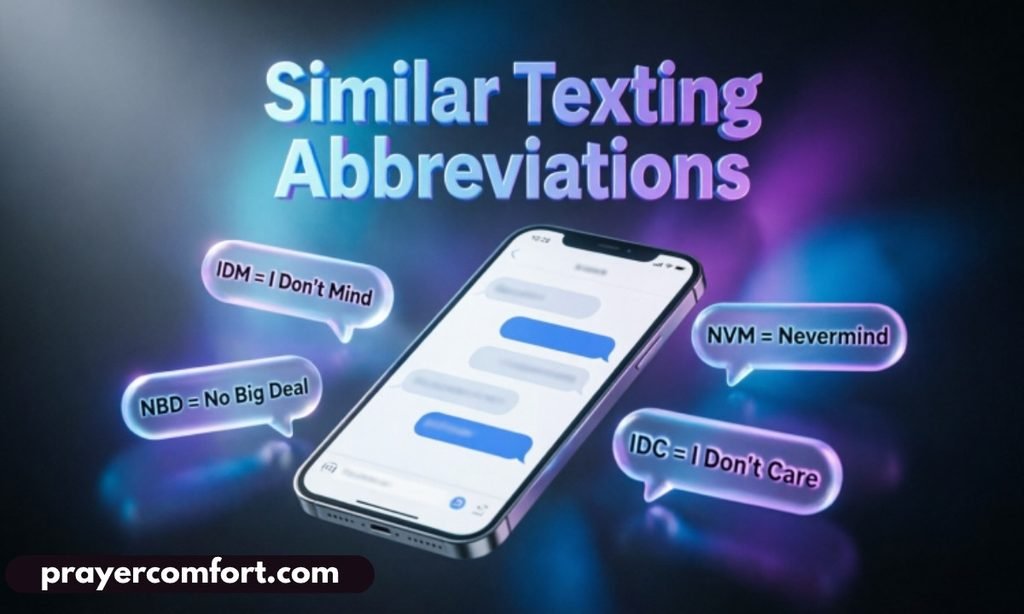
IDM sits in a small family of shorthand terms that all express agreement, indifference, or flexibility:
- IDC, I don’t care
- IDK, I don’t know
- NVM, nevermind
- WFM, works for me
- SG, sounds good
Knowing these together makes it easier to read fast-moving group chats without constantly pausing to decode texting shorthand.
Frequently Asked Questions
What does IDM mean in a text from a girl or guy?
The meaning doesn’t change based on who’s sending it. IDM still means “I Don’t Mind” regardless of the sender. Some people read it as slightly more low-key or laid-back in dating conversations, but the literal meaning stays the same.
Is IDM the same as IDC?
They’re close but not identical. IDM leans toward being agreeable and open to either option, while IDC (I don’t care) can sound more indifferent or even a little dismissive depending on tone. Context usually makes the difference clear.
Can IDM mean “in direct message”?
Occasionally, mostly on Instagram or Twitter/X, but this is far less common than the “I Don’t Mind” meaning. If you see it in a regular text conversation, it’s almost certainly not referring to direct messages.
Is it rude to reply with just “idm”?
Not usually. In casual texting, a plain “idm” reads as easygoing rather than rude. It can come across as low-effort if the other person is genuinely looking for your input on something important, so reading the room matters more than the abbreviation itself.
Does IDM mean the same thing in every messaging app?
Yes, for the most part. Whether you’re on iMessage, WhatsApp, or Android Messages, IDM keeps its core meaning of “I Don’t Mind.” The only real shift happens on social platforms, where it occasionally points to direct messages instead.
The Bottom Line
IDM is a small, everyday piece of texting shorthand that mostly means “I Don’t Mind.” It shows up when someone is being flexible about a decision and doesn’t feel strongly either way.
Outside of texting, the letters can point to something else entirely, like direct messages on social apps or unrelated software. But if you’re reading it in a normal conversation with a friend, family member, or coworker, you can safely take it at face value: they’re fine with whatever you decide.


2 thoughts on “What Does IDM Mean in Text? Powerful Guide 2k26”