

TW in a text or on social media almost always stands for “trigger warning.” It’s a short heads-up that the content coming next might touch on something upsetting, like violence, self-harm, or a personal trauma. People add it before a post, caption, or message so readers can decide whether they want to keep scrolling.
That’s the short version. But TW shows up in a few other spots too, and the meaning shifts depending on where you see it. Below is the full breakdown, with real examples of how it’s actually used.
Quick Answer
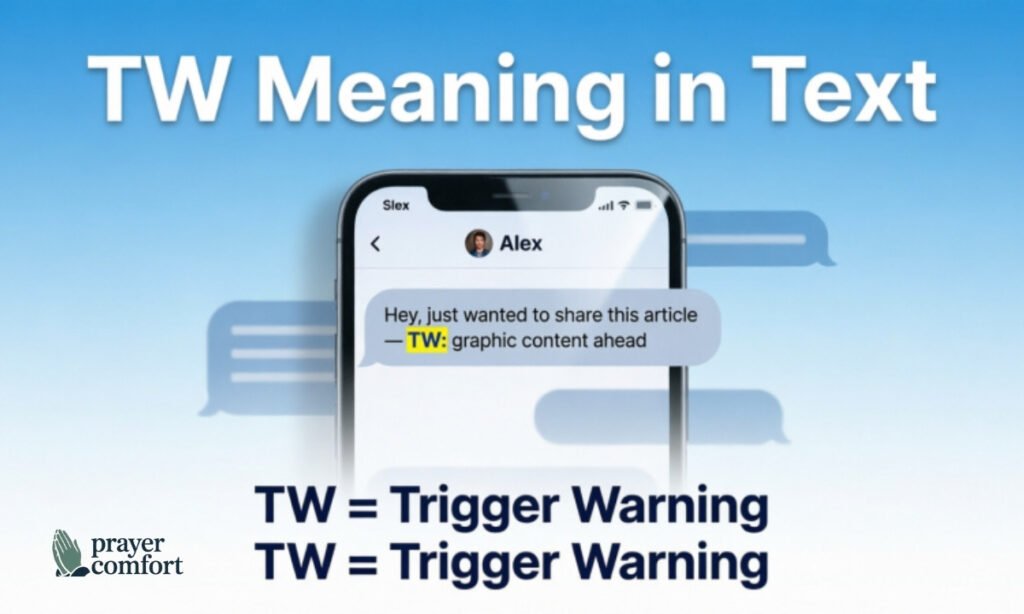
TW = Trigger Warning in almost every texting and social media context.
It’s used before content that might be distressing, such as posts about mental health, death, abuse, or graphic images. You’ll see it most on Twitter/X, TikTok, Instagram, and Reddit, and occasionally in group texts before someone shares heavy news.
Less common meanings include “teamwork” in gaming chat and “till whenever” in casual scheduling texts, though context almost always makes the meaning obvious within a sentence or two.
Read Also : BTA Meaning Explained
Why People Add TW Before a Message
Think of TW as a small courtesy flag. Someone posting about a car accident, a breakup, or a health scare will type “TW” first so people scrolling their feed get a second to brace themselves or scroll past.
It’s not about hiding information. It’s about giving the reader a choice, especially for topics that can genuinely spike anxiety or bring back a hard memory for someone.
This matters more than it sounds. A person recovering from disordered eating, for instance, might follow fitness accounts but still need a warning before a post that talks about calorie counts or weight loss numbers. The TW isn’t censorship, it’s a filter the reader controls.
Read Slang : What Does WYF Mean
Where TW Started
The term traces back to online mental health and survivor communities in the early 2000s, particularly on forums and blogging platforms like LiveJournal. Feminist and disability advocacy spaces adopted it widely, and it later spread to Tumblr, which is really where “TW” as a shorthand tag took off around the early 2010s.
From there it moved into Twitter culture, then TikTok and Instagram captions, and eventually into everyday texting between friends. The exact origin point is a bit fuzzy since informal internet slang rarely has one clean starting date, but the trigger warning concept itself is well documented in those early online support communities.
How TW Is Used on Different Platforms
The core meaning stays the same everywhere, but the tone and placement shift a little depending on the app.
On Twitter/X and Reddit
TW usually sits right at the start of a post or thread, sometimes followed by a colon and the specific topic, like “TW: death” or “TW// abuse.”
On TikTok and Instagram
Creators often put TW in the caption or as text overlay on the video itself, especially for content involving injuries, mental health struggles, or graphic footage.
In group texts or DMs
TW is more casual. Someone might send “tw, kinda heavy” before typing out a paragraph about a family situation, without any strict formatting rules.
In gaming chat
TW almost never means trigger warning. It usually means “teamwork,” as in “gg tw” (good game, teamwork) after a match.
Read Now: ICL Mean In Slang
Real Examples of TW in Conversation

Here’s how it actually looks when people type it, pulled from the kind of everyday phrasing you’d see in texts and captions.
A friend texting about a rough week might write: “tw talking about my anxiety again, feel free to skip this one 😅”
A Twitter post before sharing news: “TW: mentions of a car crash. My cousin’s okay but it was scary.”
A TikTok caption under a video: “TW// medical procedure, don’t watch if you’re squeamish, just wanted to share my recovery update.”
A Reddit thread title: “TW self harm scars, posting my healing journey update.”
Notice the pattern. TW almost always comes first, followed by a quick note on the specific topic, so the reader knows exactly what to expect before committing to read further.
When to Use TW (and When You Probably Don’t Need To)
Use TW when your message covers something that could genuinely be distressing to a chunk of your audience: self-harm, suicide, abuse, graphic injury, eating disorders, sudden death, or sexual assault.
It’s also common courtesy in group chats before sharing sudden bad news, even something like a pet passing away, since not everyone wants that dropped on them without warning.
You probably don’t need TW for:
- Mildly annoying or frustrating daily complaints
- Spoilers for a TV show (that’s usually just “spoiler alert”)
- General sad news that isn’t traumatic, like a rainy vacation
Overusing TW on low-stakes content tends to dilute it. If everything gets tagged, people stop paying attention to the tag when it actually matters.
Common Mistakes People Make With TW

The biggest mistake is using TW as a substitute for actually saying what the warning is for. Just typing “TW” with nothing else leaves readers guessing, which defeats the purpose. “TW: violence” does far more good than a bare “TW.”
Another mistake, and this one trips up a lot of newer social media users, is confusing TW with CW. Content Warning (CW) has become the preferred term in a lot of communities because it’s seen as broader and less clinical than “trigger,” which some mental health advocates argue overpromises protection a simple tag can’t actually deliver. The two are used almost interchangeably now, but if you’re writing for a mental health or advocacy-adjacent audience, CW tends to be the safer default in 2025 and beyond.
People also sometimes forget that TW means something totally different in gaming or sports contexts. Reading “tw” in a match chat as a trigger warning would be a genuine misread, since it’s shorthand for teamwork there almost every time.
Related Terms Worth Knowing
- CW (Content Warning) — the more modern, broader alternative to TW
- NSFW (Not Safe For Work) — flags explicit or graphic content, not necessarily emotionally triggering content
- Spoiler alert — warns about plot details, not emotional content
- Sensitive content warning — the formal label platforms like Instagram and Twitter/X use in their built-in warning screens
- PSA (Public Service Announcement) — sometimes used similarly, but for informational heads-ups rather than emotional ones
Frequently Asked Questions
Does TW always mean trigger warning?
Not always, but in texting and on social media it’s the meaning you’ll run into more than 90 percent of the time. The main exception is gaming chat, where TW usually means “teamwork,” and occasionally scheduling texts where it means “till whenever.”
Is TW the same as CW?
They’re used almost interchangeably today, but CW (Content Warning) is the term more advocacy and mental health communities prefer now, since it doesn’t imply the tag can fully prevent a trigger response the way “trigger warning” sounds like it can.
Why do people put TW before sad posts?
It gives readers a moment to decide if they’re in the right headspace to keep reading. Someone dealing with grief, anxiety, or a specific trauma can choose to skip the post instead of being caught off guard by it.
Is it rude not to use TW?
Not automatically, but in communities where TW is the norm, like certain Reddit threads or Tumblr blogs, skipping it on genuinely heavy content can come across as careless. It really depends on the platform and the audience you’re posting to.
What does TW mean in gaming?
In gaming chat, TW almost always stands for “teamwork,” often typed after a match like “gg tw” to thank teammates for good coordination. It has nothing to do with trigger warnings in that context.
Can TW be used sarcastically?
Yes, people sometimes add it jokingly before something mildly cringey or embarrassing, like “TW: my cooking fail” as a lighthearted way to poke fun at themselves rather than flag actual traumatic content.
Bottom Line
TW is one of those short internet tags that carries real weight once you know what it’s flagging. In nearly every texting or social media context, it means trigger warning, a quick signal that the next bit of content might be heavy.
The exceptions are worth remembering too, especially if you spend time in gaming chats where the same two letters mean something completely different. When in doubt, look at the sentence around it. Context almost always gives it away.


1 thought on “TW Meaning in Text: The Simple Guide You Need 2k26”