

You are scrolling through a group chat when a friend replies, “I’ve got major FOMO right now.” Or maybe you spot it under an Instagram photo, in a dating app message, or even in a work Slack thread. If you paused for a second wondering what it actually meant, you are not alone. Millions of people search for this term every month because texting slang moves fast, and FOMO is one of the words that never seems to go away.
This guide breaks down exactly what FOMO means, how people use it across different apps and situations, whether it can come across as rude or flirty, and how to reply when someone drops it on you. By the end, you will be able to read FOMO in any context and respond like you have been using it for years.
What Does “FOMO” Mean in Text?
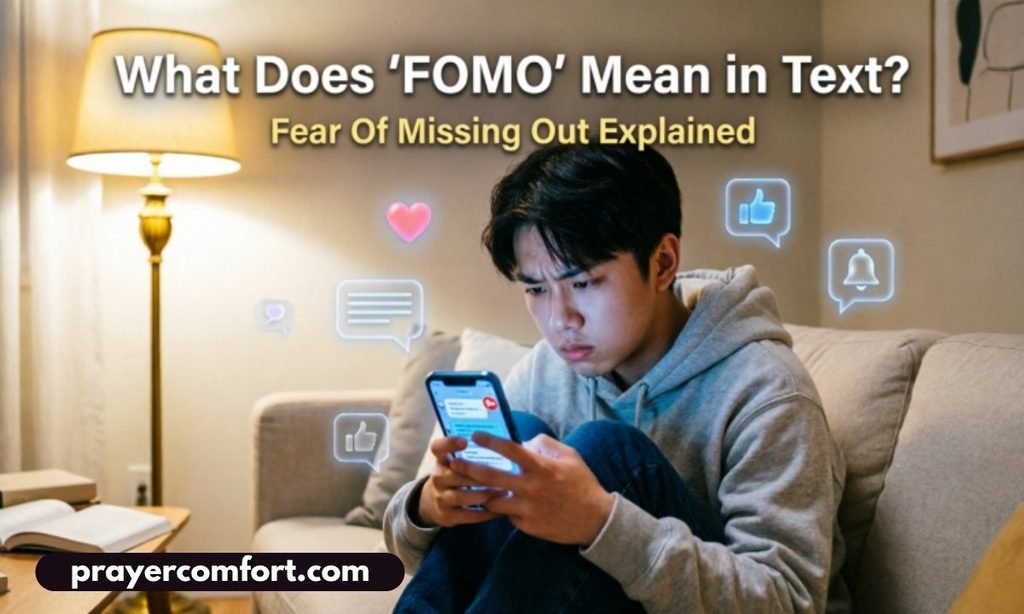
FOMO stands for Fear Of Missing Out. In texting, it describes the anxious or uneasy feeling that other people are enjoying an experience, event, or opportunity that you are not part of. It is often used casually, so it can sound dramatic while actually meaning something small, like missing a group hangout or a sale on your favorite shoes.
At its core, FOMO is an emotional shorthand. Instead of writing a long explanation about feeling left out, someone just types “FOMO” and the other person instantly understands the mood.
The Most Common Meanings of “FOMO”
FOMO is a single word, but it stretches across a few different situations depending on where and how it shows up in a conversation.
1. Missing Social Events
This is the original and most common use. Someone sees a party, dinner, trip, or hangout they were not part of and expresses regret about it.
Example: “You guys went for pizza without me? Total FOMO.”
2. Social Media Pressure
Scrolling through Instagram or TikTok and seeing other people’s highlight reels often triggers FOMO, even when nothing bad actually happened in your own day.
Example: “Everyone’s vacation photos are giving me so much FOMO.”
3. Online Trends and Virality
When a trend, challenge, meme, or new app feature spreads fast, people who have not tried it yet may say they have FOMO about being left behind.
Example: “Still haven’t watched that show everyone’s talking about, the FOMO is real.”
4. Buying or Spending Decisions
Retailers and marketers rely on this feeling to sell products. Limited time deals, low stock warnings, and countdown timers all use FOMO to push people toward faster decisions.
Example: “Only 3 left in stock” is a classic FOMO marketing line.
How “FOMO” Is Used in Real Conversations
The meaning of FOMO barely changes, but the tone shifts depending on the platform and the relationship between the people texting.
Friends & Casual Texting
Among friends, FOMO is usually lighthearted. It shows up when someone wants to be included next time, not when they are genuinely upset.
Example exchange:
Friend 1: “We’re grabbing food in ten minutes.” Friend 2: “Bro why does this always happen when I’m busy, FOMO hitting hard.”
Instagram & Snapchat
On visual platforms, FOMO often responds to a photo, story, or video rather than a written message. Someone might comment “FOMO” under a beach picture or reply to a Snap story with the word alone.
Dating Apps
In dating conversations, FOMO can hint at attraction or interest. If someone says they have FOMO after seeing your story with friends, it can be a soft way of showing they wish they were included in your life.
Gaming & Online Communities
Gamers use FOMO around limited time events, seasonal skins, or exclusive rewards. Missing a event before it disappears from the game is a very real trigger for this feeling.
Example: “That skin is only available this week, I’ve got serious FOMO about missing it.”
Work or Professional Chat
In workplace messaging, FOMO usually appears in a lighter, self aware tone, often about missing a meeting, an announcement, or an office event rather than anything emotionally heavy.
Example: “Sorry I missed the team lunch, definite work FOMO today.”
Is “FOMO” Rude, Flirty, or Offensive?
FOMO is a neutral term by default. It is not built to insult anyone, but tone, punctuation, and context can shape how it lands.
Positive use:
Used playfully to show interest in joining next time, or as harmless banter between friends.
Negative use:
Rarely offensive on its own, but it can feel like pressure or guilt tripping if someone repeats it to push another person into attending something they do not want to attend.
Flirty use:
Can suggest genuine interest, especially in a dating context, such as “FOMO seeing you out with your friends” hinting that the sender wishes they were there with you.
Reading the emojis, punctuation, and prior messages in the conversation usually clears up any confusion about which tone is intended.
Words like YOLO and FOMO

FOMO rarely travels alone. It usually shows up alongside a handful of related slang terms that describe similar feelings from different angles.
| Term | Full Meaning | How It Relates to FOMO |
| YOLO | You Only Live Once | Encourages action, while FOMO describes fear of inaction |
| JOMO | Joy Of Missing Out | The opposite feeling, contentment with staying home |
| OMO | Only Missing Out | A stronger, more intense version of FOMO |
| Hype | General excitement | Often the reason FOMO gets triggered in the first place |
| Flex | Showing off achievements or experiences | Flex posts are a common cause of FOMO in others |
Knowing this small group of terms makes it much easier to follow fast paced group chats and comment sections.
See Also “MYF Meaning in Text“
How to Respond When Someone Says “FOMO”
There is no single correct reply. The right response depends on your relationship with the person and the vibe of the conversation.
Casual Replies
- “Next time you’re coming, no excuses.”
- “Don’t worry, you didn’t miss much.”
Funny Replies
- “FOMO speedrun, you set a new record.”
- “Congrats, you’ve unlocked the FOMO achievement.”
Neutral Replies
- “Yeah it was fun, we should all plan something together soon.”
- “I get it, I’d feel the same.”
Professional Replies
- “No worries, I’ll send you the notes from the meeting.”
- “You didn’t miss anything critical, happy to fill you in.”
Common Misunderstandings About “FOMO”
Even though FOMO is common, people still misread it in a few predictable ways.
1. Thinking it is anger
FOMO is an anxious or wishful feeling, not frustration or anger directed at anyone.
2. Confusing it with “joking jealousy”
FOMO is about wanting to be included, while jealousy usually implies resentment toward the person who had the experience.
3. Assuming it only applies to parties
FOMO covers social events, but it also applies to shopping, gaming, career moves, trends, and even investing decisions.
4. Thinking it is always negative
Plenty of FOMO messages are lighthearted jokes rather than genuine sadness, so it is worth reading the full message before assuming someone is upset.
Similar Slang Terms You Should Know
Beyond YOLO and JOMO, a few other terms often appear in the same kinds of conversations:
- FOBO, the Fear Of a Better Option, used when someone hesitates to commit because something better might come along
- ROMO, the Relief Of Missing Out, describing gratitude for skipping something stressful or draining
- Main character energy, describing someone confidently living their life without worrying about missing out on others’ plans
These terms are less common than FOMO but pop up more frequently in 2026 slang lists and internet culture roundups, especially around wellness and digital detox conversations.
When You Should Avoid Using “FOMO”
FOMO fits naturally into casual digital conversation, but there are a few settings where it can feel out of place.
1. Professional Emails
Formal written communication, like emails to clients or leadership, usually calls for plain language instead of internet slang.
2. Serious Conversations
If someone is genuinely upset about being excluded, replying with slang can feel dismissive of their actual feelings.
3. Cross-cultural Chats
Not everyone recognizes internet abbreviations the same way, so relying on FOMO in international or older audience communication can create confusion.
4. Academic or Official Writing
Reports, essays, and formal documents should spell out the concept, such as “fear of missing out,” rather than using the shorthand.
Frequently Asked Questions
What does FOMO mean in texting?
FOMO means Fear Of Missing Out. It describes the feeling of worry or regret that comes from thinking someone else is having a better or more exciting experience without you.
What is FOMO in Gen Z slang?
Among younger users, FOMO usually appears in a lighthearted or humorous way, often reacting to social media posts, trends, or group plans rather than expressing deep distress.
How to use FOMO slang?
Use it whenever you want to express that you wish you had been part of something, whether that is an event, a purchase, a trend, or an online moment. It works as a standalone reply or inside a full sentence, such as “I have FOMO” or “this is giving me FOMO.”
What does FOMO stand for?
FOMO stands for Fear Of Missing Out.
Final Thoughts
FOMO has stuck around in digital conversation because it captures a real, relatable emotion in just four letters. Whether it shows up in a group chat, a comment section, a dating app, or even a marketing email, the meaning stays the same: a fear of missing something good.
Once you recognize the different ways it gets used, from playful teasing to genuine longing, you can read the tone correctly and reply in a way that fits the moment.


1 thought on “FOMO Meaning in Text: Discover What It Really Means”