
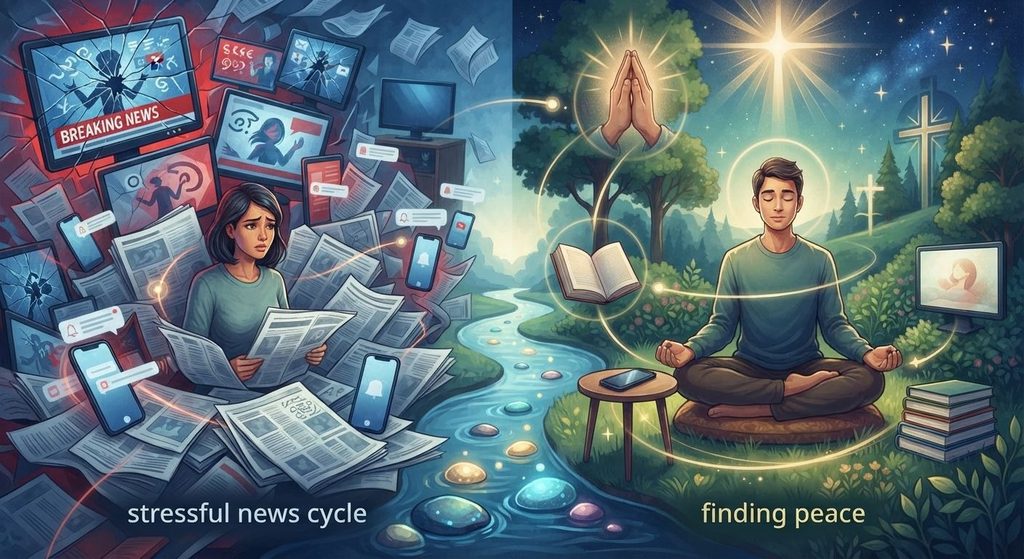
The world can feel overwhelming when news updates, political debates, and social media discussions follow us everywhere. A quick check of your phone can turn into an hour of reading upsetting headlines, watching arguments, and worrying about events happening thousands of miles away.
Staying informed is important, but constantly consuming information can leave you feeling mentally exhausted. It can become difficult to separate facts from opinions, understand complicated situations, or simply enjoy a quiet moment.
Finding peace does not mean ignoring the world. It means learning how to stay informed without allowing every headline to control your emotions. Prayer, reflection, and thoughtful media habits can help create a healthier balance between awareness and inner peace.
Why the Constant News Cycle Can Feel Overwhelming
News is available around the clock. Social platforms make it easy to encounter breaking stories, political opinions, personal reactions, and dramatic headlines within seconds.
The challenge is that not every update deserves the same level of attention. Some stories are important and require careful understanding, while others are repeated, exaggerated, or presented without enough context.
Constant exposure to negative or emotionally charged content may contribute to:
- Feeling worried about situations outside your control.
- Finding it difficult to concentrate on everyday responsibilities.
- Becoming frustrated by online arguments.
- Reacting emotionally before checking the facts.
- Spending more time scrolling than you originally intended.
Recognizing these patterns is a useful first step. You can care about the world while still protecting time for rest, family, faith, and personal responsibilities.
Prayer Can Create Space for Calm and Reflection
Prayer gives many people an opportunity to pause, express their concerns, and seek guidance from God. Instead of immediately reacting to another headline, taking a quiet moment for prayer can help bring attention back to what matters most.
A simple prayer during a stressful news cycle might be:
Heavenly Father, when the world feels uncertain and the news becomes overwhelming, help me remain calm and thoughtful. Give me wisdom to understand what I read, patience with people who see things differently, and strength to focus on what I can positively influence. Protect my heart from unnecessary fear and guide me toward peace, compassion, and truth. Amen.
Prayer does not mean that difficult situations will disappear or that every question will receive an immediate answer. For many believers, it is a way to approach uncertainty with faith rather than allowing fear to dominate every thought.
Learn to Separate Facts From Opinions Online
One of the most useful habits in today’s digital environment is learning to distinguish verified information from personal commentary.
A social media post may contain a strong opinion, but that does not automatically make every statement in it a proven fact. Even knowledgeable commentators can interpret events differently.
When reading about politics, law, or public affairs, consider these questions:
- Is the post reporting a confirmed event or expressing an opinion?
- Does it link to an original document, official statement, or reliable report?
- Are important details missing from the discussion?
- Have other credible sources reported the same information?
- Is the headline designed to inform readers or provoke an emotional reaction?
For example, readers following legal and political commentary may come across public figures such as Asha Rangappa. Before drawing conclusions from a short social media post, it can help to explore the person’s wider work and understand the difference between a brief reaction and a detailed explanation. A useful starting point is this guide to Asha Rangappa’s Bluesky presence and wider commentary.
The goal is not to agree with every commentator. It is to become a more thoughtful reader who checks context before accepting or sharing a claim.
Build a Healthier Relationship With Social Media
Social media can connect people with useful information, communities, and different perspectives. However, unlimited scrolling can make it difficult to switch off.
A few practical boundaries can make a meaningful difference.
Set Specific Times to Check the News
Instead of checking updates every few minutes, choose one or two reasonable times during the day. This helps you stay informed without allowing notifications to interrupt every activity.
Follow Reliable Sources
Choose sources that explain their reporting, correct mistakes, and distinguish news from commentary. Following a smaller number of dependable sources can be more useful than receiving hundreds of unverified updates.
Avoid Arguments That Offer No Value
Not every disagreement needs a response. If a conversation becomes insulting or repetitive, stepping away can be a sensible decision.
Take Breaks Before Bed
Reading upsetting stories immediately before sleeping can make it harder to relax. Consider replacing late-night scrolling with prayer, reading, or another quiet activity.
Make Room for Positive Content
Your online experience does not have to revolve around conflict. Follow accounts that share encouragement, education, creativity, and meaningful discussions.
Focus on What You Can Actually Influence
Many major news stories involve decisions made by governments, institutions, courts, and public officials. Ordinary individuals may have limited control over these events.
That does not mean personal action is meaningless.
You can choose to:
- Treat people with kindness during difficult conversations.
- Support someone who is struggling.
- Volunteer or contribute to a community cause.
- Learn about important issues before forming an opinion.
- Share accurate information instead of spreading rumors.
- Participate responsibly in your community.
When an issue involves legal rights or public policy, understanding the background can also help. Resources such as LawHeavy’s legal and public-affairs information can provide a starting point for exploring legal topics in more detail.
Being informed is valuable, but so is recognizing the difference between something you can influence and something you cannot control.
Create a Simple Daily Routine for Peace of Mind
A balanced routine can help you stay connected to your faith while managing your digital habits.
Consider trying this simple approach:
Morning: Begin with a short prayer or moment of gratitude before opening social media. Think about the responsibilities and opportunities ahead.
During the day: Check reliable news sources at a planned time. If a story interests you, look for the full report instead of relying only on a headline or screenshot.
Afternoon: Take a short break from your phone. Spend time with family, complete a personal task, or enjoy an activity away from screens.
Evening: Reflect on the day. Consider what went well, what challenged you, and what you can approach differently tomorrow.
Before sleep: Put your phone aside and make time for a quiet prayer. Ask for wisdom, patience, and strength for the next day.
If you want to develop a more consistent faith-based morning routine, these Monday morning prayers for peace, guidance, and blessings offer additional inspiration.
The routine does not need to be complicated. Small, consistent habits can make it easier to approach information with a calmer mindset.
Practice Compassion When People Disagree
Political and social discussions can become personal very quickly. People often have different experiences, beliefs, and priorities, which influence how they interpret the same event.
It is possible to disagree without insulting someone. Before responding to a controversial post, pause and consider whether your response will contribute something useful.
Compassion does not require you to accept misinformation or abandon your beliefs. It simply means remembering that there is a person on the other side of the conversation.
Prayer can also encourage patience and humility. Asking for wisdom before speaking may help you respond thoughtfully rather than allowing anger to guide your words.
When It Is Time to Step Away
Sometimes the healthiest response to an overwhelming news cycle is to take a break.
You do not have to follow every developing story, respond to every discussion, or know every detail immediately. Important events will still be there when you return to reliable sources later.
If news-related worry begins interfering with your daily life, relationships, or ability to rest, consider talking with someone you trust or seeking support from a qualified professional.
Taking care of your well-being is not the same as being indifferent to the world. It can help you remain more patient, attentive, and supportive toward the people around you.
Conclusion
Staying informed and finding inner peace do not have to be competing goals. You can follow important events, learn about public issues, and listen to different perspectives while maintaining healthy boundaries around your time and attention.
Prayer offers a meaningful opportunity for reflection and spiritual comfort. Responsible media habits help you distinguish facts from opinions, avoid unnecessary arguments, and focus on information that genuinely matters.
The next time a headline makes you feel overwhelmed, consider pausing before scrolling further. Take a breath, say a prayer, check the facts, and remember that you do not have to carry the weight of the entire world at once.
A peaceful mind is not built by avoiding every difficult issue. It grows through faith, wisdom, compassion, and the ability to recognize when it is time to pause.
Frequently Asked Questions
1. Can prayer help when the news makes me anxious?
For many believers, prayer provides comfort, encourages reflection, and offers a way to express worries and seek guidance. It can be part of a healthy approach to handling stressful information.
2. Should I stop following the news to protect my peace?
Not necessarily. Staying informed can be valuable. The goal is to create reasonable boundaries, choose reliable sources, and avoid excessive exposure to upsetting content.
3. How can I tell whether a social media post is trustworthy?
Check the original source, look for supporting evidence, compare coverage from credible outlets, and distinguish personal opinions from confirmed information.
4. What is a good prayer for stressful times?
A simple prayer asking God for wisdom, patience, courage, and peace can be meaningful. You can use your own words and speak honestly about what is troubling you.
5. How often should I check the news?
There is no universal schedule. Many people find it helpful to check reliable sources at planned times instead of repeatedly refreshing social media throughout the day.
6. Is taking a break from social media irresponsible?
No. Taking a temporary break can help you regain focus and return to important discussions with a clearer perspective. You can care about current events without following every update.

