
An over/under line is the goal count a bookmaker uses as the dividing point for a match, and you bet that the final total lands above or below it. A 2.5 line means three or more goals wins the over. A 2.75 line splits your stake across two lines, so exactly three goals gives a half result instead of a clean win or loss.
This guide covers M88 over under odds as a mechanic: how the numbers settle, what they say about the match, and why the price matters as much as the line. One caveat first. Public sources explain how totals lines settle far better than they explain how any single bookmaker builds them, so this guide is firm on settlement and cautious on trading decisions.
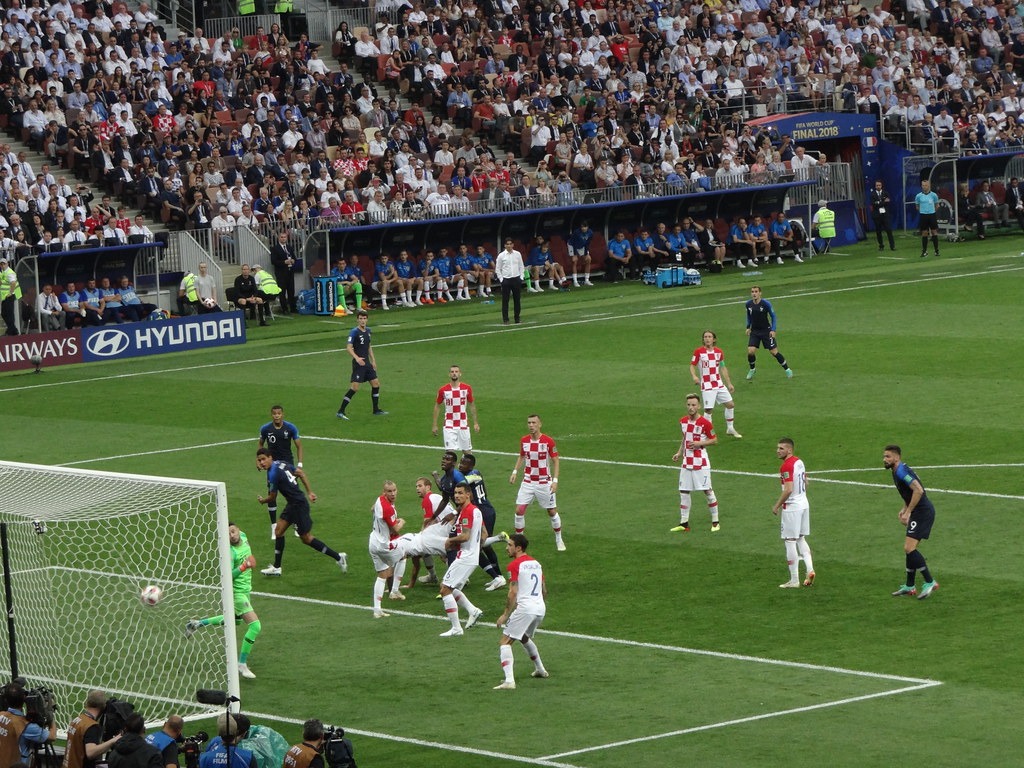
What does a 2.5 goal line actually mean?
Over 2.5 wins when the match produces three or more goals. Under 2.5 wins when it produces two or fewer. The .5 ending means a bet can only win or lose, with no refund (a push).
Take a 2-1 final. That is three goals, so the over wins and the under loses. A 1-0 final is one goal, so the under wins. Nothing else about the match matters, not who scored first or when.
Lines do not have to end in .5. Totals can be whole numbers (2, 3), halves (2.5, 3.5) or quarters (2.25, 2.75). Whole numbers bring refunds into play, and quarters bring in partial results.
How do quarter lines like 2.25 and 2.75 settle?
A quarter line splits your stake evenly between the two nearest lines. Over 2.75 is half Over 2.5 plus half Over 3.0. Under 2.75 is half Under 2.5 plus half Under 3.0.
The easiest way to see it is with $100 on Under 2.75 in a match that ends with exactly three goals. The $50 on Under 2.5 loses. The $50 on Under 3.0 is refunded, because three goals lands exactly on that line. You lose half your stake. The same match on Over 2.75 gives the mirror image: $50 wins at 2.5 and $50 is refunded at 3.0, so you get a half win.
Here is how the over side settles at the two scores that matter most:
| Over line | Exactly 2 goals | Exactly 3 goals |
|---|---|---|
| Over 2.0 | Refund | Win |
| Over 2.25 | Half refund, half loss | Win |
| Over 2.5 | Loss | Win |
| Over 2.75 | Loss | Half win, half refund |
| Over 3.0 | Loss | Refund |
Be careful with published settlement tables. At least one recent table describes Under 2.75 at three goals as a half win, which contradicts the split arithmetic above, and most other explainers show a half loss. If a table disagrees with the split logic, trust the logic and check the operator’s own rules.
The shape of the table also tells you what each line is for. A 2.25 line concentrates its partial results around two goals, and a 2.75 line concentrates them around three. So choosing 2.75 over 2.5 means three goals is the scenario you want cushioned. To compare how a fixture’s totals are quoted across lines, the football markets at M88 are one place to look, but compare the prices attached to each line, not only the numbers.
What moves a goal-totals line?
The factors that public explainers agree on are fairly consistent:
- Attack and defence strength, often summarised through expected goals (xG).
- Style and tempo: open, high-pressing sides tend to push totals up, while cautious sides pull them down.
- Motivation and context, such as what is at stake in the fixture.
- External conditions, including weather and pitch quality.
My view is that a line is best read as an expectation, not a prediction. A 2.25 line on a match between two low-xG, slow-tempo sides is not a promise of a dull game. It is the market’s central estimate, with the quarter split absorbing the likelihood of exactly two goals.
What the sources do not document is the internal process: how opening lines are chosen, how they move, and how much betting volume matters. Many articles claim to explain this, but none I found cites an official source or industry data. Treat confident descriptions of bookmaker trading with caution.

Why must you read the price and the line together?
A price of 1.90 on Over 2.5 and a price of 1.90 on Over 2.75 are different bets. The 2.75 version gives back a refund on part of your stake at exactly three goals, so it is a different proposition. A line with more protection normally carries a different price, and the price of a 2.75 line typically sits between the prices of 2.5 and 3.0. A lower line is not automatically better value. Under 2.75 protects you more than Under 2.5 at three goals, but the price usually reflects that advantage. Saying “over goals at 1.90” without naming the line leaves out half the information.
A popular shortcut is to average the prices of the two neighbouring lines to estimate a quarter line. One model-based example shows this is only exact for Over 2.25 and Under 2.75. In those two cases both halves win on the same set of scores, so the average holds. For Over 2.75 or Under 2.25, the halves behave differently at the pivotal score, so the shortcut drifts. It also ignores the bookmaker’s margin, which is built into every price.
The same example also shows why the three-goal refund matters. The distribution below comes from a single illustrative model with an unspecified league and dataset, so it shows how probability is spread, not what a typical league looks like:
| Outcome in the example model | Share |
|---|---|
| 3 or more goals | 50.7% |
| 4 or more goals | 28.7% |
| Exactly 3 goals | 22.0% |
| Exactly 2 goals | 24.5% |
In that model, roughly one match in five lands on exactly three goals. That is the share of outcomes where a 2.75 or 3.0 line behaves differently from 2.5.
Where can you see these lines in practice?
Reading settlement tables is useful, but the lines make more sense when you watch a live market. The sportsbook at https://m88.inc/ covers football odds and other sports, so it can serve as a reference for how totals sit next to other markets on the same match.
I have not verified how M88 displays totals lines or its own settlement and limit rules. Check the operator’s terms before relying on any rule described here. Only stake money you can afford to lose.
What should you watch next?
Coverage of Asian totals is moving from simple definitions toward settlement tables and fair-price maths, and the most recent pieces focus on how fractional lines in low-scoring leagues decide how much of a stake comes back. That is where line choice matters most, since two and three goals are the common results there. The next useful thing to track is how often your preferred league lands on exactly two or exactly three goals, because that count tells you more than the headline number on the line.

