
You typed a sentence, then paused. Was it “keeped” or “kept”? You are not alone. Thousands of English learners freeze at this exact spot every single day. The good news is that keep past tense has only one correct form, and once you see the pattern, you will never doubt it again.
Quick Answer
The past tense of keep is kept. It works the same way for every subject: I kept, you kept, she kept, they kept. There is no “keeped.” Kept also doubles as the past participle, so you use it in both simple past sentences and perfect tense sentences.
Simple Background
English verbs split into two families: regular and irregular. Regular verbs just add “ed” at the end, like “walk” becoming “walked.” Irregular verbs refuse to follow that rule, and keep is one of them.
This pattern actually traces back to Old English, where many common verbs changed their internal sound instead of adding an ending. That is why “keep” turns into “kept” rather than “keeped.” The word itself comes from the Old English “cepan,” meaning to observe, guard, or hold onto something. Over centuries, the spelling shifted, but the irregular past form stuck around.
Clear Explanation of the Difference
What is “Keep”?
Keep is the base form, also called the present tense or V1. You use it for actions happening now, habits, or general truths.
Example: I keep my keys on the table every morning.
What is “Kept”?
Kept is the past tense form, or V2. You use it for actions that already finished.
Example: I kept my keys on the table yesterday.
The meaning barely changes. Only the timing shifts from now to before.
Keep past tense rules
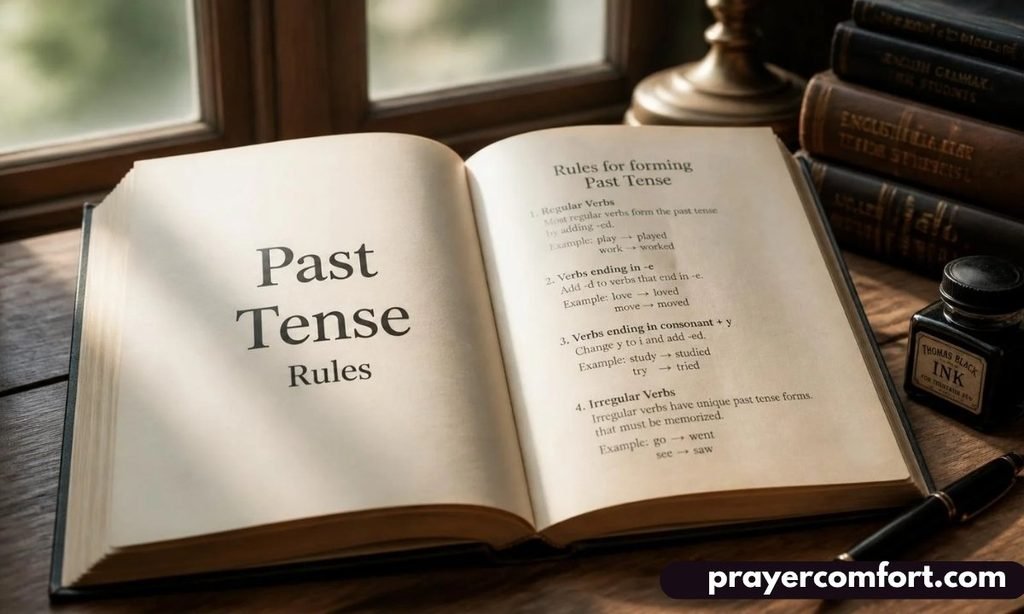
Here are the core rules, stripped down to the essentials:
- Keep is irregular, so it never takes “ed.”
- The past tense form is always kept, no matter the subject.
- Kept also serves as the past participle, used with have, has, or had.
- Negative past tense uses “did not keep,” not “did not kept.”
That last rule trips people up constantly. Once you add “did,” the main verb goes back to its base form, keep.
Read Now : Whose vs Who’s
Comparison Table
| Tense | Form | Example |
| Present | keep | She keeps her promises. |
| Past | kept | She kept her promise. |
| Past Participle | kept | She has kept every promise. |
| Future | will keep | She will keep her promise. |
Which One to Use and When
Use keep when talking about the present or something that happens regularly. Use kept when the action is already done and finished.
Simple Tip to Remember
Think of it this way: “keep” has an extra “e,” almost like it is still holding on. “Kept” drops that extra letter, like the moment has already passed and let go. It is a small visual trick, but it works when your brain blanks under pressure.
Keep past tense and past Participle
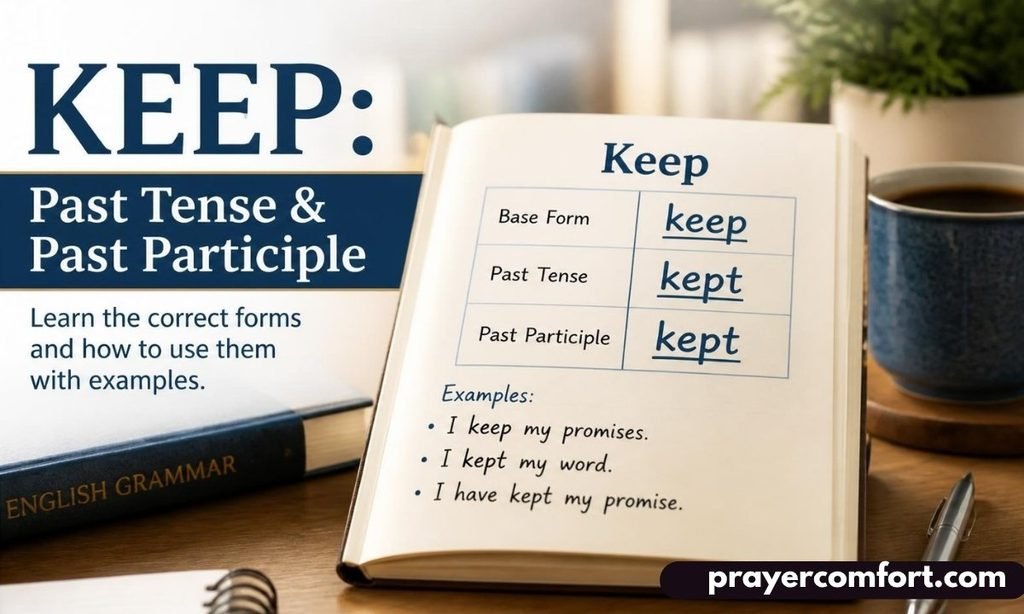
This is where a lot of learners get stuck, so let’s clear it up completely. Kept is not just the simple past tense. It is also the past participle, meaning it teams up with helping verbs like have, has, or had.
Simple past: I kept my word.
Present perfect: I have kept my word for ten years.
Past perfect: I had kept my word before things changed.
Notice the verb form never changes. Only the helping verb tells you which time frame you are in. That is one less thing to memorize, not more.
Common Mistakes People Make
1. Saying “keeped”
This is the most common error, especially among new English speakers and even native speaking kids. Keep belongs to the irregular verb club, so the “ed” rule simply does not apply here.
2. Using present tense for past actions
“Yesterday I keep my notes organized” sounds off because “yesterday” signals the past. The correct sentence is “Yesterday I kept my notes organized.”
3. Forgetting irregular verb forms
Some learners mix and keep up with regular verb patterns because so many English verbs do follow the “ed” rule. Keep, like sleep, weep, and sweep, stubbornly does not. Grouping these irregular cousins together in your memory actually speeds up recall.
Keep future tense
The future tense of keep is will keep, or “going to keep” in casual speech.
Example: I will keep this promise no matter what happens.
Example: We are going to keep the meeting short tomorrow.
Future tense never touches the irregular past form, so this one is refreshingly simple.
Everyday Real Life Examples
In School
The teacher kept the classroom quiet during the test.
In Daily Life
He kept the receipt in case he needed a refund.
In Messages
“Sorry for the late reply, I kept forgetting to check my phone.”
On Social Media
“I just kept my New Year’s resolution for three whole months, a personal record.”
Keep past tense worksheet
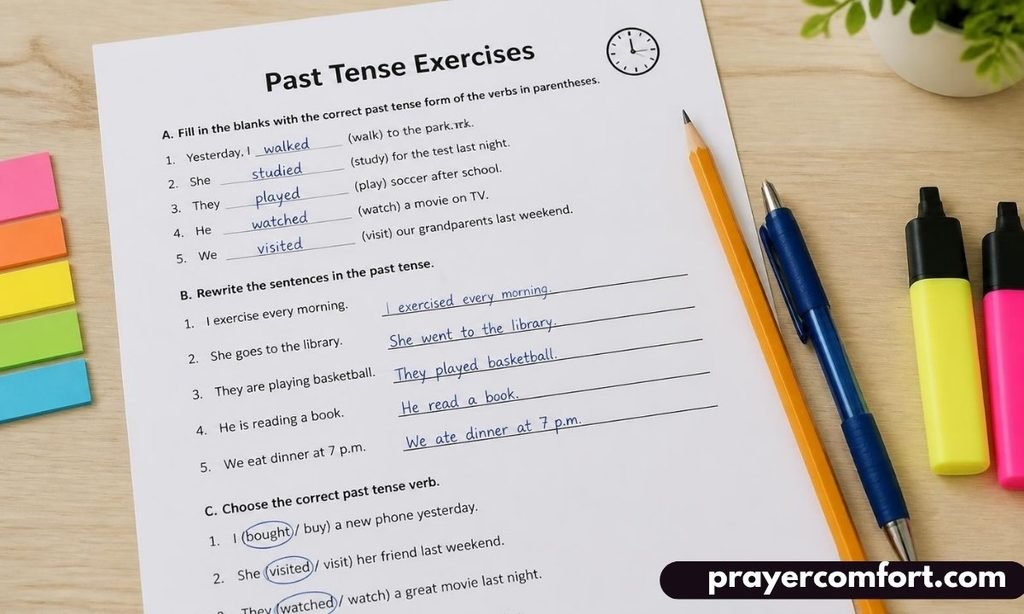
Try filling in the blanks with the correct form of keep:
- She ______ the door for me yesterday. (kept)
- They usually ______ their word. (keep)
- By the time I arrived, he had already ______ his promise. (kept)
- We will ______ in touch after graduation. (keep)
- I ______ waited outside for twenty minutes last night. (kept)
Check your answers against the parentheses once you finish.
Short Learning Section for Students
Step 1: Learn the forms
Memorize the three core forms together: keep, kept, kept. Saying them out loud as a trio helps them stick faster than reading them silently.
Step 2: Practice
Write five sentences using kept in different contexts: school, home, work, and friendships. Variety builds real understanding, not just memorization.
Step 3: Use memory trick
Picture someone physically “keeping” something, then imagine that same item now sitting in the past, already handled. The dropped “e” in kept mirrors that shift.
Step 4: Practice speaking aloud
Reading grammar rules silently rarely builds fluency. Say your practice sentences out loud, record yourself if possible, and listen back. Speaking locks the pattern into muscle memory faster than reading ever will.
Frequently Asked Questions
Is it keeped or kept?
It is always kept. “Keeped” is a common but incorrect form since keep is an irregular verb.
What is the V1, V2, V3 of keep?
V1 is keep, V2 is kept, and V3 (past participle) is also kept.
What does “keep” mean?
Keep means to hold onto, retain, maintain, or continue doing something. It can also mean to store something or to honor a promise.
What is the future tense of “keep”?
The future tense is will keep, used for actions that have not happened yet.
Final Thoughts
Grammar rules feel intimidating until you break them down piece by piece, and keep versus kept is one of the easier irregular verbs to master once the pattern clicks. Remember the trio: keep, kept, kept.
Use kept for anything already finished, keep for anything ongoing or habitual, and will keep for anything still ahead. Practice a few real sentences today, and this mix up will disappear from your writing for good.

Ethan is a passionate content creator and SEO specialist with 2 years of hands-on experience in crafting compelling digital narratives.A peaceful space to find daily prayers, uplifting blessings, and spiritual inspiration to brighten your life.

1 thought on “Keep Past Tense: Master It With Easy Examples 2026”