

If you’ve typed this word and then stared at it wondering whether you added an extra letter, you’re not alone. Both “authorized” and “authorised” are correct; the difference isn’t about right or wrong, it’s about which country you’re writing for.
Americans use the z, and everyone else in the English-speaking world tends to use the s. Here’s exactly when to use each one, why the split exists, and how to stop second-guessing yourself.
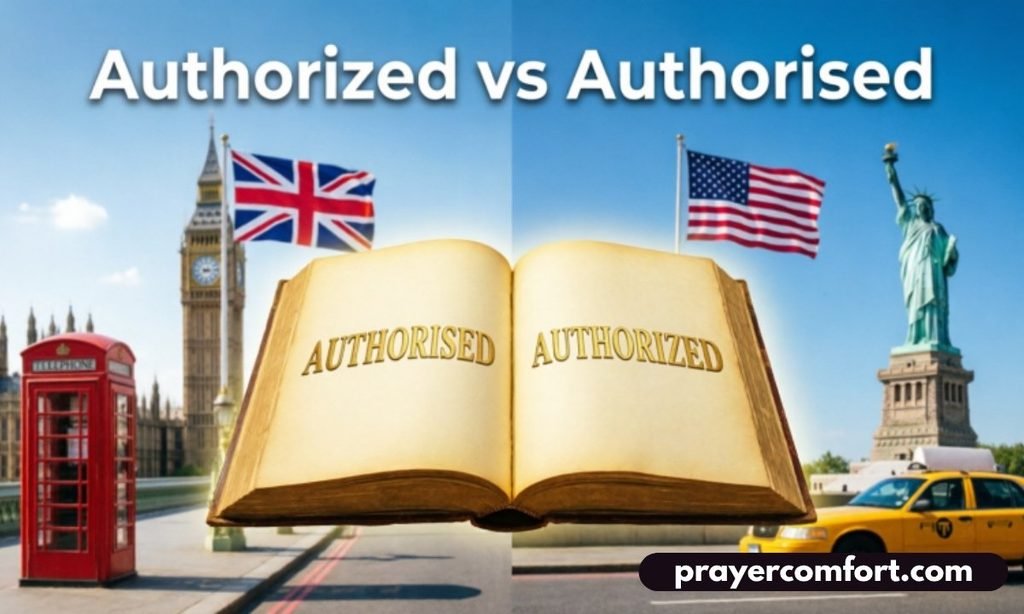
Authorized
Authorized is the standard spelling in the United States and Canada. It’s the past tense and past participle of the verb “authorize,” meaning to give official permission, approval, or power to do something. You’ll see it in American contracts, tech platforms, government forms, and everyday business writing.
Example: “The manager authorized the refund before the customer left the store.”
Authorised
Authorised is the preferred spelling everywhere outside North America the UK, Australia, New Zealand, Ireland, India, and most of the Commonwealth. It carries the exact same meaning as “authorized.” The only thing that changes is the letter.
Example: “Only authorised staff may access the server room.”
Authorized or Authorised – Quick Answer
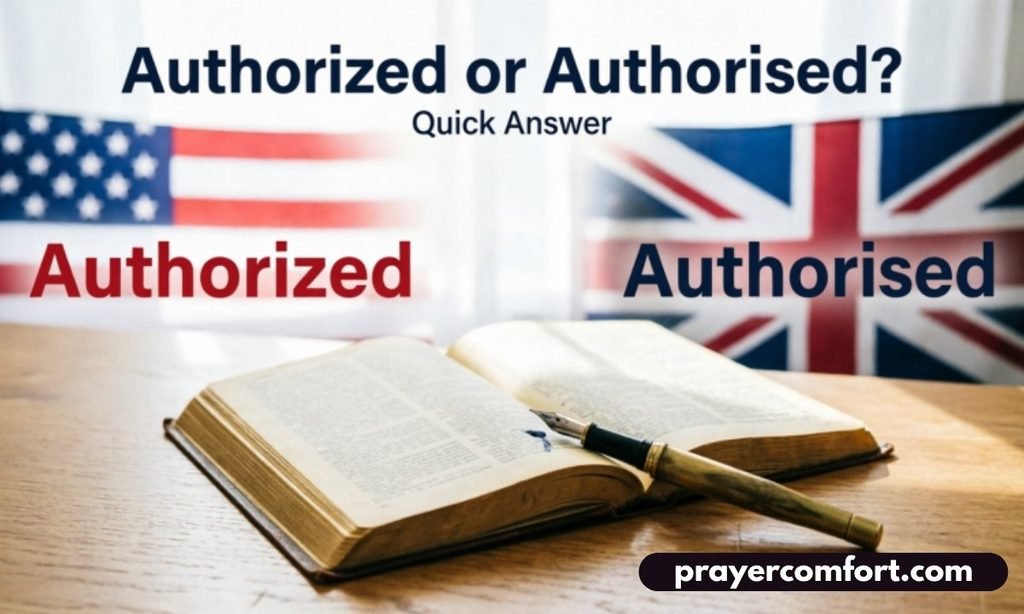
Use authorized if you’re writing for a US or Canadian audience. Use authorised if you’re writing for the UK, Australia, or another Commonwealth country.
Neither spelling is more “correct” than the other; they’re regional variants of the same word, and the choice comes down to your audience, not grammar rules.
The Origin of Authorized or Authorised
Both spellings trace back to the Latin word auctor, meaning someone who originates or grants authority. That root gave English the word “author,” and later, “authorize” to formally hand someone the power to act.
The split between the two spellings took shape in the early 19th century, when American lexicographer Noah Webster pushed for simplified, more phonetic spellings in his 1806 dictionary. The -ize ending stuck in American English, while British English gradually leaned toward -ise for many similar words.
Interestingly, -ize isn’t actually a modern American invention. “Authorize” was the older form and remained standard even in British English until the second half of the 20th century, since it belongs to a group of classically derived words that traditionally took the -ize ending. So if you’ve ever seen “authorize” in an older British text, that’s why the -ise preference is a more recent shift, and it’s still not universally locked in across British publishing.
British English vs American English Spelling
Main Rule
The pattern isn’t unique to “authorize.” American English generally favors -ize endings (organize, realize, recognize), while British English tends to favor -ise (organise, realise, recognise). This shows up in the noun forms too: authorization is American, authorisation is British.
A small exception worth knowing: even British style guides don’t agree completely. The Oxford English Dictionary actually recommends -ize spellings for many of these words, including “authorize,” because it reflects the Greek origin of the suffix. So you may still spot “authorize” in UK academic or Oxford-style writing; it’s not a mistake, just a different house style.
Examples
- US style: “The bank authorized the transaction within minutes.”
- UK style: “The bank authorised the transaction within minutes.”
- US style: “She is an authorized dealer for the brand.”
- UK style: “She is an authorised dealer for the brand.”
Authorized or Authorised Synonym
Depending on context, you can swap in words like approved, sanctioned, permitted, licensed, or certified.
The best synonym depends on tone: “sanctioned” fits formal or governmental contexts, while “approved” works better in everyday business writing.
Comparison Table
| Term | Correct? | Meaning | Typical Use | Example |
| Authorized | Yes (US/Canada) | Officially permitted or approved | American business, tech, legal writing | “Only authorized users can log in.” |
| Authorised | Yes (UK/Commonwealth) | Officially permitted or approved | British, Australian, Indian writing | “Only authorised users can log in.” |
How To Use “Authorised” In A Sentence
“Authorised” functions as an adjective (describing something that has permission) or as the past tense of “authorise” (the action of granting permission). Here’s how it looks in real UK-style writing:
- “The document must be signed by an authorised representative.”
- “Parliament authorised the new spending plan last week.”
- “You are not authorised to enter this area.”
Use it the same way you’d use “authorized” just swap the spelling to match a British, Australian, or Commonwealth audience.
Synonyms and Opposites
Synonyms: approved, sanctioned, permitted, licensed, certified, empowered
Opposites: unauthorized/unauthorised, forbidden, banned, restricted, denied
Authorized vs Authenticated
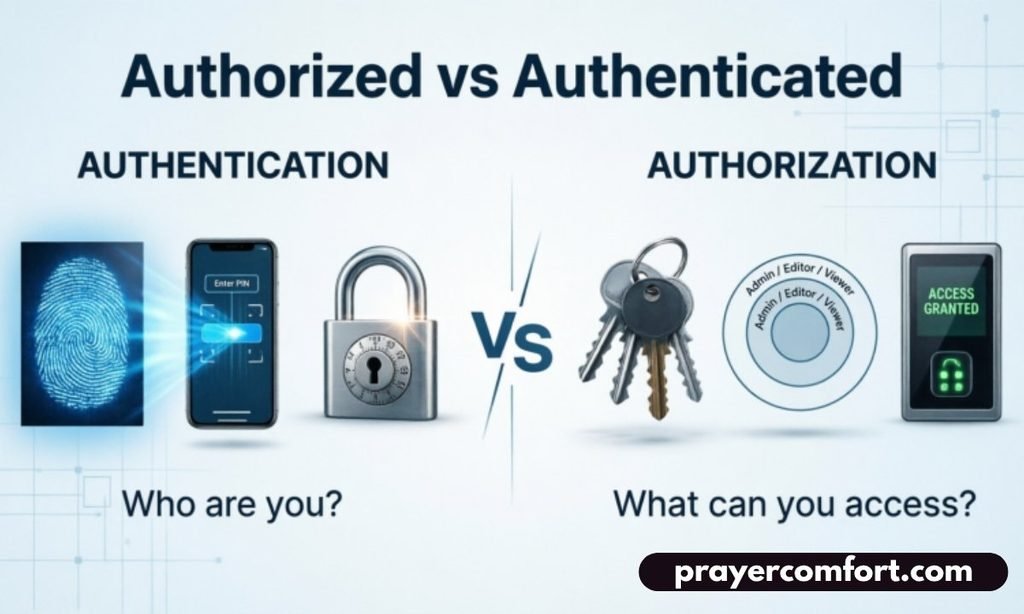
These two get mixed up constantly, especially in tech writing, but they mean different things. Authorized refers to permission whether someone is allowed to do something. Authenticated refers to identity whether someone has proven they are who they say they are.
A simple way to remember it: authentication comes first (proving who you are, like logging in with a password), and authorization comes second (determining what you’re allowed to do once you’re in). A user can be authenticated but still not authorized to access certain files.
Which Spelling Should You Use?
Match your spelling to your audience, not your personal preference:
- Writing for US readers, American clients, or US-based platforms → authorized
- Writing for UK, Australian, Indian, or other Commonwealth readers → authorised
- Writing for a global or mixed audience → pick one spelling and stay consistent throughout the entire document
If your word processor is set to a specific English dialect (US or UK), it will usually flag the “wrong” spelling automatically, a quick way to double-check before you publish.
Common Mistakes with Authorized or Authorised
Mixing spellings within the same document. Using “authorized” in one paragraph and “authorised” in another looks careless, even if both are individually correct. Pick one and stick with it.
Assuming the meaning changes. It doesn’t. This is purely a spelling variation, not a difference in definition, pronunciation, or usage.
Confusing it with “authenticated.” As covered above, these words serve different purposes: permission versus identity verification.
Ignoring your audience. Using “authorized” in a UK legal document (or vice versa) can look out of place, especially in formal or official writing where regional consistency matters.
A simple way to remember the difference: Zip code = America = authorized. Sterling (the British pound) = UK = authorised.
Authorized or Authorised in Everyday Examples
- Text message (US): “Just got a text that my card purchase was authorized.”
- Workplace email (UK): “Please confirm this expense has been authorised by your line manager.”
- Academic writing (US): “The study was authorized by the university’s ethics board.”
- Social media (UK): “Delighted to be an authorised reseller of this brand!”
Authorized or Authorised – Google Trends & Usage Data
Search interest for “authorized” is consistently higher worldwide than “authorised,” largely because the US generates a much larger share of English-language search traffic.
That said, in countries like the UK, Australia, India, and South Africa, “authorised” remains the dominant spelling in local searches, government documents, and official publications. Neither figure indicates which spelling is “more correct” ; it simply reflects population size and internet usage patterns.
Keyword Comparison Table
| Related Term | Region | Notes |
| Authorization | US/Canada | Noun form, American spelling |
| Authorisation | UK/Commonwealth | Noun form, British spelling |
| Authorize | US/Canada | Verb, base form |
| Authorise | UK/Commonwealth | Verb, base form |
| Unauthorized/Unauthorised | Both | Opposite meaning, same regional split |
Frequently Asked Questions
Is it authorize or authorise?
Both are correct. Authorize is standard in American and Canadian English, while authorise is standard in British and Commonwealth English. The meaning and pronunciation are identical only the spelling changes based on your audience.
What is the difference between authority and authorisation?
Authority is the power or right to make decisions or give commands. Authorisation is the specific act of granting permission for a particular action. In other words, a person needs authority before they can give authorisation.
What does authorise mean?
To authorise something means to give official permission, approval, or power for it to happen. For example, a manager might authorise an employee’s overtime hours or a company’s expense claim.
What does authorisation mean?
Authorisation is the noun form it refers to the official permission itself, or the process of granting it. It’s commonly used in banking, IT security, and legal contexts, such as “payment authorisation” or “access authorisation.”
Final Thoughts
There’s no wrong choice between “authorized” and “authorised” , only a mismatched one. Pick the spelling that matches your audience’s English, keep it consistent across your writing, and you’ll never trip over this word again.

